• Skip to primary navigation
  • Skip to main content
  • Skip to primary sidebar
  • Internet
    • Browsers
    • Cloud Computing
    • Online Video
    • Search Engines
    • Web 2.0
  • Mobile
    • Android Apps
    • Apps
  • Software
  • Funny Stuff
  • Social Networks
  • Web Tools

Daily Bits

  • Home
  • About
  • Archives
  • Contact
  • Advertise

Arnold Zafra

Mobile Phone is the New Social Connector

May 2, 2023 by Arnold Zafra

Ruder Finn, an independent PR company published some interesting findings of their new study – Mobile Intent Index. The study measures, well mobile phone users’  intent for accessing the Internet via their mobile devices.

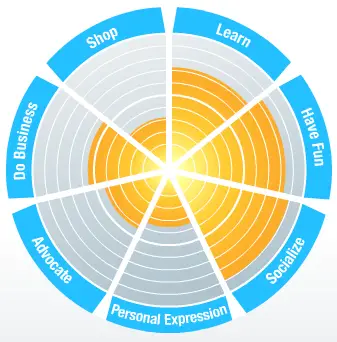
According to the report, the average time spent by Americans on the mobile Internet is 2.7 hours. And what do they do during those times?  To socialize, manage their personal finances and push their advocacy.

Contrary to what we may have believed all along, mobile phone users do not access the Internet via mobile phones for educational purposes or for creative expression.  The study also found out that usage by gender and age differ. That is men access the mobile web to “escape” while women to “make others laugh.” Now that seems rather vague, right?

Another interesting finding of the report is the fact that immediacy is the major factor why users access the Internet via mobile.

“Our survey data shows that people use their mobile phones out of necessity for instant access to the Web whether it’s to conduct business with the most recent information or advocate on the spot on issues of pressing concern and breaking news,” said Marty McGough, director of Ruder Finn Insights

The study also highlights the fact that mobile phone apps are continously increasing with 61% of the respondents saying that they have downloaded an application at least once per month, and 36% of the respondents saying that they have downloaded applications from social networking sites at least once per month.

As a mobile connector, mobile phone access is used primarily to:

  • Instant message – 62%
  • Forward e-mails (58%), content (40%) and photos (38%)
  • Post comments on social networking sites – 45%
  • Connect to people on social networking sites – 43%

Interesting findings, right? So, which of these connectivity features do you do on your mobile phone?

Filed Under: Internet, Mobile Tagged With: mobile internet, mobile phones

BuddyPress Now Available for All WordPress Installation

May 1, 2023 by Arnold Zafra

BuddyPress, a social networking add-on that previously worked only with WordPress MU installation is now available for all WordPress installs.  I’m really excited about this development as I’ve always wanted to try out BuddyPress for a long time now.

With BuddyPress 1.2 on your standard WordPress install, you can now start letting your blog readers create extended profiles, display activity streams, discussion forums, private messaging and groups within individual posts on your blogs.  What’s good about BuddyPress 1.2 is the fact that you can turn off some of its features which you don’t like to have.

Integrating WordPress on your current blog installs is easily done as well. It only takes three steps which you can follow here. After installing, you  may need to tweak it a bit to work well with your blog’s overall theme.

In addition to the features we mentioned BuddyPress also now includes permalinks for each action in the activity streams. Likewise, users will now be able to “favorite” activity items as well as send @replies to other users. Truly, a powerful social networking feature.

For requirements, you need to have at least WordPress 2.9.1 or better yet upgrade your install to 2.9.2 if you haven’t done so yet.

Filed Under: Internet, Software Tagged With: buddypress, wordpress

Social Network Users are Predominantly Young Middle-Aged Folks

May 1, 2023 by Arnold Zafra

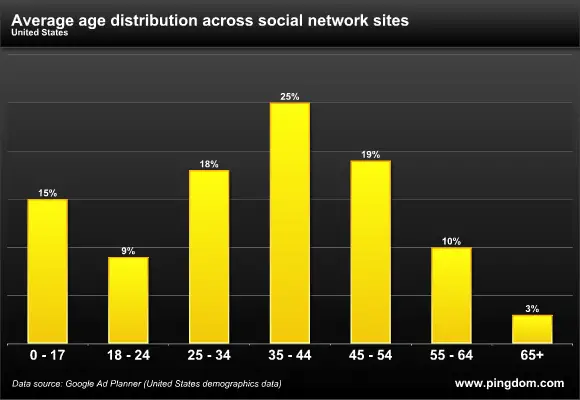
First of, I really have to commend the folks at Royal Pingdom for coming up with such a comprehensive study on the demographics of social network users. It’s a pretty good study with just about enough statistics that will really give you a good grasp of who are really into social networking today. So, what do they find out? Majority of the social network users are predominantly middle-aged folks who belong to the 35-44, not that tech savvy youngsters that we may all have thought before this study.

The study took stock of site demographics information for the United States which they gathered using Google’s Ad Planner service and then made additional calculations to come up with their final data. The report includes age data of members from 19  social networking sites including -Facebook, MySpace, LinkedIn, Twitter, Reddit, Digg, Slashdot, Delicious, StumbleUpon, Friendster, Last.fm, Friendfeed, LiveJournal, Hi5, Tagged, Ning, Xanga, Classmates.com and Bebo.

So, some interesting highlights of the report include:

  • 25% of social network users belong to the 35-44 age group
  • 3% of social network users belong to the 65-older group
  • 65% of the users are in using Twitter and/or Facebook
  • Bebo and MySpace are both widely used by users age 17 or younger

Those were just some of the key findings of the report. If you want to learn more, just check out Royal Pingdom.

Meanwhile, what really puzzles me is the fact that if  the predominant users of Facebook are age 35-44 how come I still see tons of Mafia updates, senseless trivia questions, virtual gifts and other utterly unimportant stuff from my Facebook contacts?  Does this mean that Facebook users are into the site not for business and social networking purposes but rather to while away time?  Where is the maturity there, friends?

Filed Under: Internet, Social Networks Tagged With: Social Networks, user demographics

More Shoppers Will Go Mobile by 2015

May 1, 2023 by Arnold Zafra

It looks like e-commerce is taking a new route these days – via mobile phones. That is more shoppers are doing their daily shopping fix using their mobile phones, says ABI Research’s latest “Mobile Commerce” study which focused on mobile online shopping and mobile payments for virtual goods.

According to the report, mobile shoppers are projected to spend as much as $119 billion on goods and services via their mobile phones. Although the increase is quite significant, overall however this only amounts to 8% of the total e-commerce market. ABI’s report include global forecasts for e-commerce, mobile online shopping as a subset of e-commerce, virtual goods as well as mobile payments for those virtual goods.

ABI’s senior analyst Mark Beccue said that mobile online shopping is getting more common among online shoppers.

“In the United States, mobile online shopping rose from $396 million in 2008 to $1.2 billion in 2009. While definitions of ‘mass market adoption’ vary, a more than threefold increase in one year indicates significant consumer interest.”

Interestingly while the U.S. mobile shopping industry is steadily growing, its current condition still fall way too short of the mobile shopping industry in Japan which reached more than $10 billion in 2009. Europe’s mobile shopping market is steadily growing as well and is expected to surpass the US market by the end of 2010.

Does this mean that U.S. online shoppers don’t use their mobile phones as much as their Japanese or European counterparts before?  It seems that it’s not really a problem on the consumers part though.

The report also noted that interests toward smartphone is only starting to build up. Plus support for mobile commerce is websites is also just starting to get a headway recently.

Filed Under: Internet, Mobile Tagged With: mobile commerce, mobile shopping

Symbian OS Goes Open Source with Symbian^3 (S^3)

April 30, 2023 by Arnold Zafra


Symbian OS, one of the biggest mobile platform thanks to Nokia has just gone open-source with its latest iteration – Symbian^3(S^3).  This latest version is touted as a “feature complete” mobile platform with major features such as increased usability and advanced interface, faster networking capability, 3D graphics support and 2D acceleration engine and more.

As early as now, members of the Symbian community such as device manufacturers, network operators, hardware and software developers and other stakeholders have started engaging with Symbian S^3 with the first device sporting the new platform expected to be released in Q3 this year.

So as mobile phone users, what should we expect from the newly open-sourced Symbian S63 platform? There are several innovations actually such as:

  • HDMI support  – lets  you watch 1080p movies from your phone to your LCD TV
  • music store integration embedded within the radio –   allows you to identify a song, learn more about it and purchase it directly via a “buy now” button
  • more efficient memory management – lets you to run more apps in parallel providing you with faster multi-tasking experience
  • new 2D and 3D graphics architecture – takes full advantage of hardware acceleration for delivering faster and more responsive user interface.
  • 4G networking architecture – balances individual application needs such as bandwidth, latency and jitter.
  • one click connectivity – simplifies the process of connecting to the Internet and allows you to configure platform-wide behavior.
  • usability enhancements – allows adoption of a direct “single tap” interaction mode to make it easier to do common tasks on your device, include multi-touch gestures.
  • enhanced phone homescreen – supports multiple pages of widgets and simple flick gesture navigation

Symbian Foundation hopes that interested parties will continue to create more compeling products and services now more than before as Symbian S^3 is now easier to deploy and accessible to all.

Filed Under: Mobile Tagged With: symbian S^3

Twelve Mobile Companies to Form Global App Market, Should Apple Be Afraid?

April 30, 2023 by Arnold Zafra

This could perhaps be one of the biggest, if not the biggest announcement that comes out of the Mobile World Congress. It’s big because twelve mobile operators have teamed up to form the world’s biggest, unified mobile apps market.  Dubbed “Wholesale Applications Community“, this global alliance aims to establish a simple route to market for developers and give them access to customer base of over 3 billion users, forming an ecosystem based on openness and transparency for the benefit of everyone.

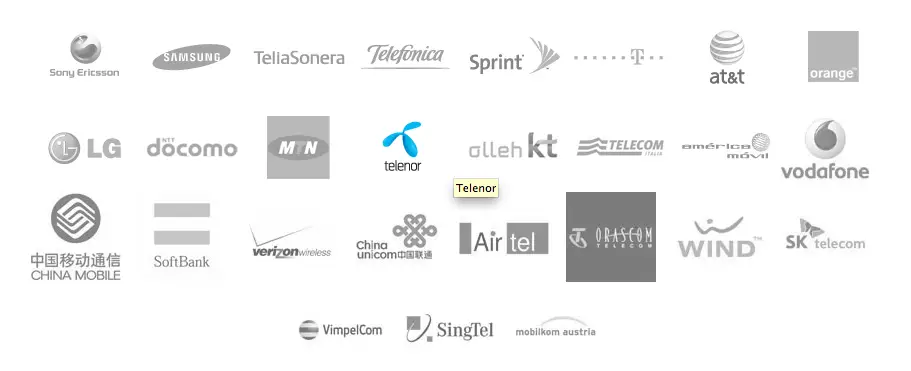
The Wholesale Applications Community already has the support of twelve mobile industry players who just signed a memorandum of understanding at the ongoing Mobile Web Congress. These companies include – América Móvil, AT&T, Bharti Airtel, China Mobile, China Unicom, Deutsche Telekom, KT, Mobilkom Austria Group, MTN Group, NTT DoCoMo, Orange, Orascom Telecom, Softbank Mobile, Telecom Italia, Telefónica, Telenor Group, Telia Sonera, SingTel, SK Telecom, Spint, Verizon Wireless, VimpelCom, Vodafone and Wind, as well as Samsung, LG and Sony Ericsson.

The alliance aims to benefit mobile phone users by providing broader choice of innovative mobile apps and services on a wider choice of mobile devices. For application developers, the alliance will provide an environment where they can flourish and create straight-forward apps. It will also provide developers with a gateway to market their apps. Additionally, the alliance will use existing technical standards such as APIs to make it easier for participants to develop useful mobile apps. This also means that developers will just need to create one version of their apps which can be used on multiple device including Android, Symbian and Others.

Interestingly, the iPhone was not mentioned. So, many are quick to react that the Wholesale Applications Community is being geared to challenge Apple’s Apps Store. Should Apple be afraid? What do you think?

Filed Under: Mobile, Software Tagged With: apple, wholesale applications community

  • « Go to Previous Page
  • Page 1
  • Interim pages omitted …
  • Page 14
  • Page 15
  • Page 16
  • Page 17
  • Page 18
  • Interim pages omitted …
  • Page 48
  • Go to Next Page »

Primary Sidebar

Privacy Policy

Copyright © 2025 · News Pro On Genesis Framework · WordPress · Log in